

OTT/CTV Video Advertising
Stream Your Message Straight to the Living Room
TV isn’t what it used to be — and that’s a good thing for marketers. With OTT (Over-the-Top) and Connected TV (CTV) advertising, your video ads appear on platforms like Hulu, Roku, Amazon Fire, and smart TVs, targeting users based on who they are — not just what they’re watching.
At Y Associates, we help you run targeted, unskippable video ads on the shows your audience streams every day.
Get A Free Proposal!
Reach Audiences on Premium Streaming Platforms
What Is OTT/CTV Advertising?
OTT (Over-the-Top)
refers to streaming content delivered over the internet — bypassing traditional cable or satellite TV.
CTV (Connected TV)
is the device used to stream that content (like Roku, Apple TV, or Smart TVs).
Your ads appear just like traditional TV commercials — but with the targeting power of digital media.
Where Your Ads Appear
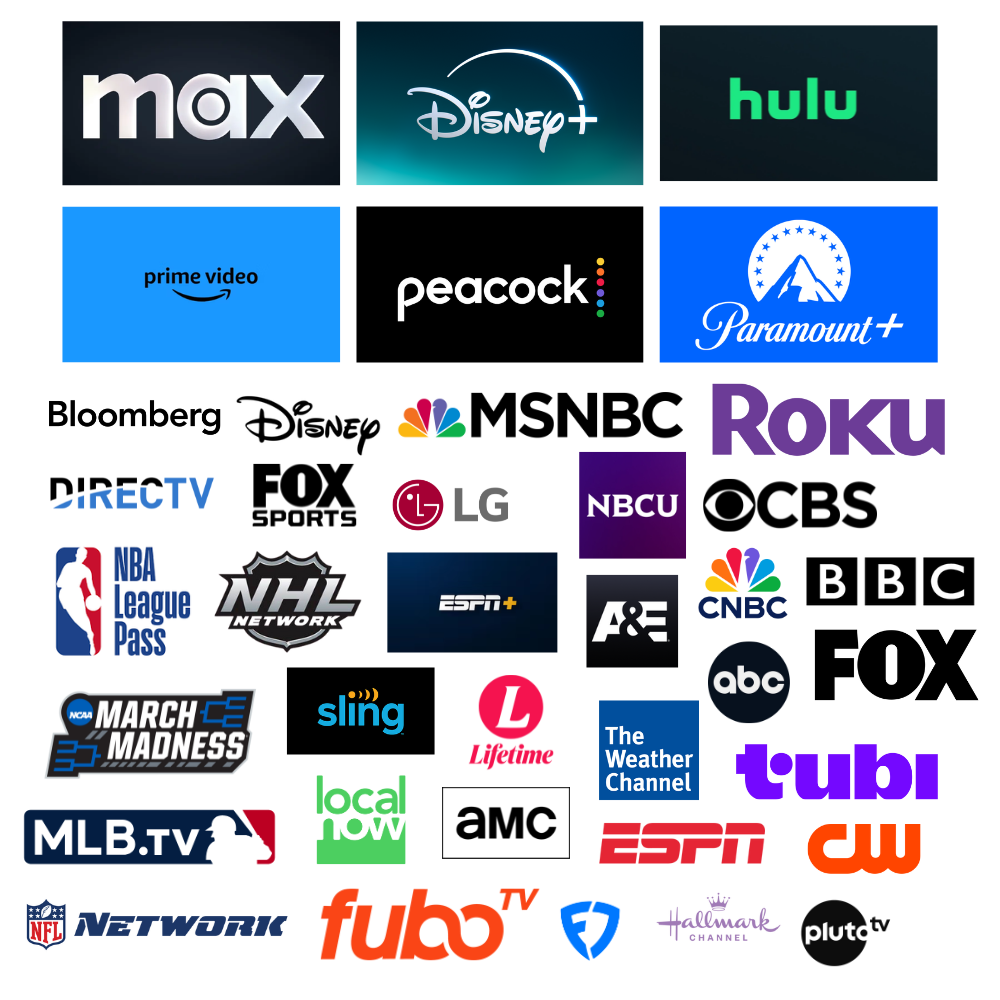
Your video ads will be placed on top-tier streaming services, ensuring high-quality impressions across:
And more premium streaming networks.

OTT vs. CTV — What's the Difference?
OTT = The Platform
- Hulu, Sling, Peacock...
- Ad buys through DSPs
- Content-level targeting
CTV = The Device
- Roku, Smart TV, Fire Stick...
- Device-level targeting
- Household-level attribution
Ideal For:
- Brands looking to scale high-impact awareness
- Local service businesses building trust
- Healthcare, legal, real estate, automotive
- Multi-location and franchise models
- Event promotion and public service campaigns
At Y Associates, we manage both seamlessly under one unified campaign.

Why Y Associates?
We combine the creative, the media strategy, and the programmatic platforms needed to make your OTT/CTV campaign work — whether it’s your first video ad or part of a full-funnel, cross-channel strategy.
How CTV and OTT Advertising Is Bought
CTV and OTT ads are bought programmatically, the same way as online video: through a buying platform, on a CPM basis, meaning you pay per thousand impressions. You are not buying a slot on a network at a set time. You are buying households that match your targeting, wherever they are streaming. Screens outside the home buy the same way. See digital out of home advertising.
That is the main difference from cable or broadcast TV. A traditional TV buy reaches everyone watching a channel in a market. A CTV buy reaches the specific households you choose, across many apps and devices, and stops showing the ad once each household has seen it enough times.
Most placements are 15 or 30 second spots that play before or during a show, and most cannot be skipped.


What You Can Target With CTV
- Geography, down to a ZIP code, a city, a DMA or a radius around your locations
- Audience, using demographic, household and interest data such as age range, income bracket or homeownership
- Content, by genre, network or type of programming, so a sports audience and a news audience are bought separately
- Retargeting, reaching households that already visited your website
- Device and app, including smart TVs, streaming sticks and game consoles
- Daypart and frequency, controlling when the ad runs and how many times each household sees it
Frequency control matters more in CTV than in most channels. Seeing the same ad twice builds recognition; seeing it ten times in one evening annoys the viewer. We set caps per household from the start.
How CTV Is Measured
A TV screen has no mouse, so clicks are not the right yardstick. CTV is measured with a different set of numbers:
- Impressions, the count of ads actually delivered to a household
- Video completion rate, the share of ads watched to the end
- Reach and frequency, how many unique households saw the ad and how often
- Household-level site visits, matching devices on the same home network that visited your site after the ad ran, through a pixel on your site
- QR code scans, when the ad includes one
- Search and traffic lift, watching branded search and direct visits in the targeted area during the campaign
We report which of these are hard counts and which are modeled, so the results are read the right way.

Creative That Works on the Big Screen
CTV runs on the largest screen in the house, usually with the sound on. That changes what a good ad looks like:
- Say the brand in the first few seconds. Some viewers look away before the end
- One message per spot. If you have two offers, make two versions
- Use a short web address or a QR code instead of a long URL or a phone number to write down
- Deliver in high resolution, 16:9. A video made for a phone in vertical format will not fill the screen
An existing commercial or brand video can often be adapted. We handle the specs, the edits and the variations for testing.
What Drives the Cost
We do not quote a flat rate, because the same budget reaches very different numbers of households depending on how it is spent. These are the factors that move it:
- How narrow the targeting is. More audience filters mean fewer households and a higher cost per thousand
- Audience data. Layering third-party household data adds to the cost of each impression
- Inventory. Premium streaming apps price above long-tail apps
- Market size. A single metro, a state and a national buy price differently
- Frequency. Higher caps mean each household costs more to reach
- Production. Adapting an existing video costs less than producing a new spot
Tell us the budget and the goal and we will tell you what it realistically buys before you commit.
CTV and OTT Advertising FAQ
What is the difference between CTV and OTT?
OTT is the streaming content delivered over the internet, such as Hulu or Peacock. CTV is the television device it plays on, such as a smart TV or a Roku. Most campaigns buy both together.
Can we run CTV ads only in our city?
Yes. Geographic targeting down to the ZIP code is one of the most common local uses, so a local business can reach homes in its own service area without paying for a whole market.
Is CTV the same as YouTube advertising?
YouTube ads that play on a television screen are one part of CTV. A full CTV campaign also reaches the other streaming apps and devices where YouTube is not available.
Do we need a TV commercial to start?
No. A 15 or 30 second video is enough, and an existing brand video can often be edited to fit. We can also produce the spot.
How is this different from buying cable TV?
Cable sells time on a channel to everyone watching in a market. CTV sells impressions to the households you choose, with frequency control and reporting on what each household did after seeing the ad.
Let’s Stream Your Brand Where It Matters
We strategically place your video ads across premium streaming platforms, optimizing performance for engagement and conversions.